


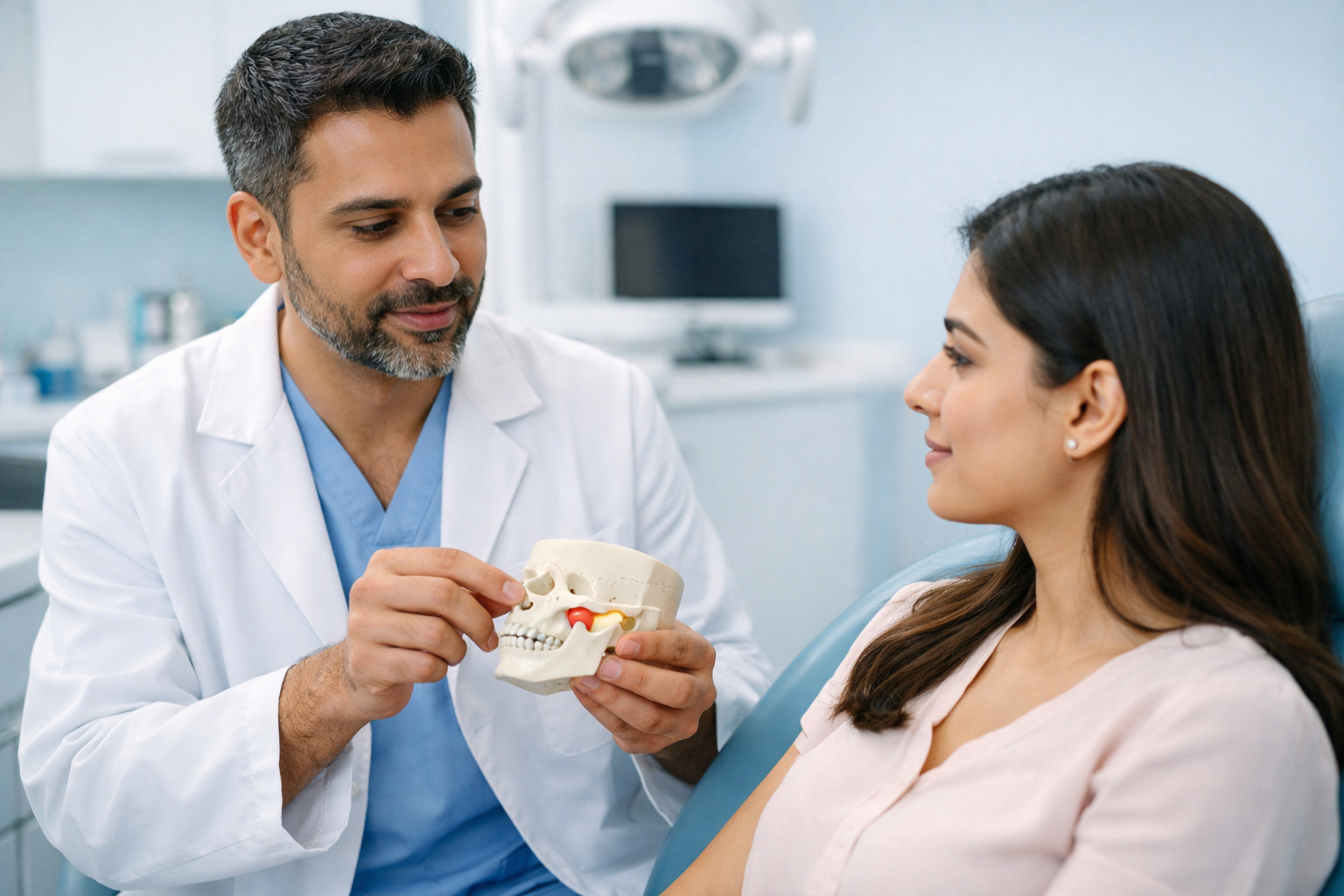
Jaw clicking, tightness, headaches, or facial pain can be TMJ-related — but the good news is most cases improve with the right plan.
If you’re comparing dental clinics in south delhi, this guide helps you understand options (without the confusing jargon).
Table of Contents
What TMJ Problems Feel Like (and why they’re confusing)
TMJ discomfort can be tricky because it doesn’t always feel like “jaw pain.” Some people feel it near the ear,
some call it a headache, and others think it’s a tooth problem. The temporomandibular joint (TMJ)
sits close to the ear area, and when irritated, it can create symptoms that mimic other issues.
Common TMJ signs:
- Clicking/popping when opening the mouth
- Morning jaw tightness (often linked to night grinding)
- Headaches around temples
- Facial muscle soreness
- Limited mouth opening or jaw locking
Get checked sooner if you have:
- Jaw locking frequently
- Pain that keeps worsening
- Severe bite changes (sudden)
- History of jaw injury/trauma
These don’t always mean a serious problem, but they should be evaluated properly.
Many patients searching for dental clinics in south delhi come in thinking it’s “ear pain” or “a tooth problem.”
A focused TMJ assessment helps identify whether the issue is muscle-based, bite-based, joint-based, or a combination.
Key Causes of TMJ Disorders
TMJ issues usually develop from multiple triggers rather than one single reason. Understanding the cause helps build a plan that lasts.
| Cause | Examples | What It Can Lead To |
|---|---|---|
| Stress | Clenching, teeth grinding (bruxism) | Muscle fatigue, morning soreness, headaches |
| Bite Misalignment | Overbite/underbite/crossbite, uneven bite | Uneven pressure → joint strain over time |
| Arthritis | Osteoarthritis or rheumatoid arthritis | Joint inflammation, stiffness, restricted movement |
| Injury/Strain | Trauma, sudden strain, sports injury | Disc or joint irritation, persistent pain |
First-Line (Non-Invasive) TMJ Treatments
Most TMJ cases respond well to conservative care. The aim is to reduce stress on the joint, relax muscles,
and improve jaw movement — without jumping to invasive steps.
1) Custom Night Guard / Splint Most common
If you grind or clench at night, a custom guard can reduce the load on your jaw joint and protect teeth from wear.
It’s often a first step because it’s safe, non-invasive, and helps many patients quickly.
2) Jaw Physiotherapy & Exercises
TMJ-friendly exercises can improve jaw mobility and reduce stiffness. In some cases, guided physiotherapy
helps retrain jaw movement and reduce muscle spasms.
3) Lifestyle Adjustments (small changes, big impact)
- Soft diet during flare-ups (avoid hard/chewy foods)
- Avoid gum, nail biting, and wide yawning habits
- Warm compress for muscle relaxation
- Stress management (sleep routine helps more than people expect)
4) Bite Evaluation + Orthodontic Correction (selected cases)
If bite imbalance is the main trigger, orthodontic treatment (braces/aligners) may be considered for long-term stability.
This is case-dependent and should be recommended only when clinically justified.
5) Medications (short-term support)
Pain relievers or anti-inflammatory medication may be advised for flare-ups. These help manage discomfort but are not a permanent fix
when the root cause is grinding or bite-related.
| Treatment | Purpose | Effectiveness |
|---|---|---|
| Custom Night Guard | Reduce grinding pressure, relieve muscle tension | High |
| Physical Therapy | Improve movement, reduce stiffness | High |
| Orthodontic Adjustments | Address bite imbalance long-term | Moderate |
| Medications | Reduce pain and inflammation temporarily | Moderate |
Advanced TMJ Treatment Options
When conservative care doesn’t help enough — or when there’s structural joint involvement — advanced options may be considered.
These are typically used for persistent symptoms and are selected after careful evaluation.
Botox (for muscle overactivity)
In selected cases, Botox can relax overactive jaw muscles and reduce pain from chronic clenching. Results are temporary and often best
when combined with guards, habit changes, or bite management.
Arthrocentesis (minimally invasive joint flush)
Arthrocentesis may be recommended to reduce joint inflammation and improve movement when there is fluid buildup or inflammation
limiting mobility.
Arthroscopy
Arthroscopy uses small incisions to address internal joint issues such as scar tissue or disc problems in a more targeted way.
Open-Joint Surgery (rare, severe cases)
Reserved for severe structural damage and only after other options have been exhausted.
| Procedure | Best For |
|---|---|
| Botox | Chronic clenching / muscle tension |
| Arthrocentesis | Inflammation / fluid buildup |
| Arthroscopy | Scar tissue / disc misalignment |
| Open-joint surgery | Severe structural joint damage |
Why Early TMJ Treatment Matters
TMJ symptoms can escalate if the underlying cause continues (like nightly grinding or an uneven bite).
Early care often prevents chronic pain, progressive stiffness, and tooth wear.
That’s why many people searching for dental clinics in south delhi for jaw pain benefit from early assessment —
in many cases, conservative steps work best when started sooner.
How to Choose Care in South Delhi
When evaluating dental clinics in south delhi for TMJ concerns, look for a clinic that:
- Explains the likely cause (muscle vs bite vs joint)
- Starts with non-invasive options first
- Tracks improvement over follow-ups
- Recommends advanced options only when truly needed
Need help with jaw pain or clicking?
Book a TMJ evaluation to understand the cause and choose the right treatment plan.
FAQs
Can TMJ pain feel like ear pain?
Yes. The TMJ sits close to the ear region, so inflammation or muscle strain may be felt around the ear or temple area.
Does a night guard help with TMJ?
If you grind or clench, a custom night guard often reduces pressure on the joint and decreases morning jaw tightness.
Is TMJ caused by stress?
Stress can trigger clenching or grinding, which overworks jaw muscles and increases strain on the joint.
When are advanced TMJ procedures considered?
If symptoms persist despite conservative care, or if joint-related structural issues are suspected, advanced options may be considered after evaluation.
How soon should I consult a dentist for TMJ symptoms?
If pain, locking, or headaches continue for more than a couple of weeks, it’s best to get assessed. Early care usually prevents worsening.
