
What is a Dental Implant?
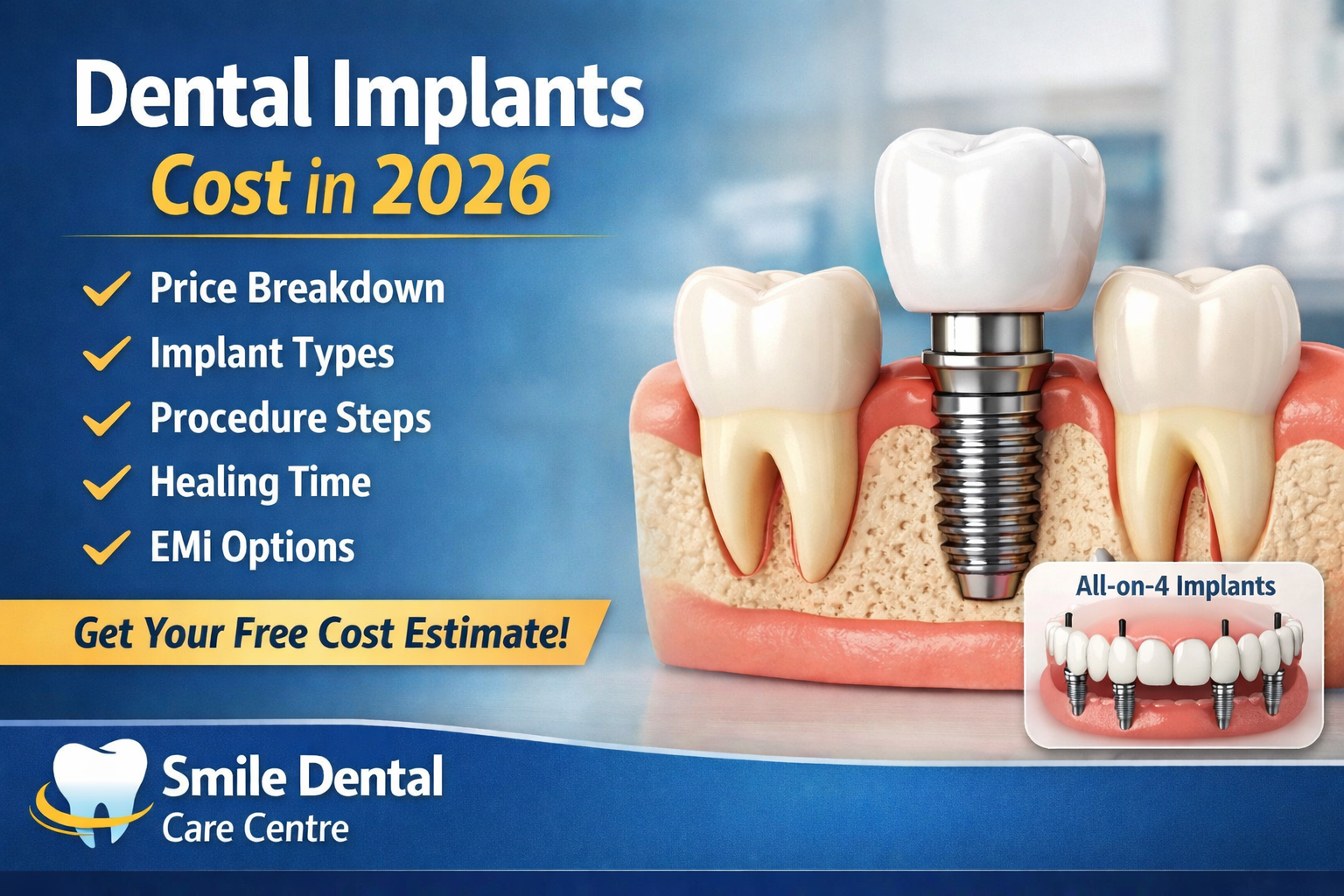
A dental implant is a titanium/zirconia “root” placed inside the jawbone. It supports a crown (cap) that looks and functions like a natural tooth. Implants are considered the most long-term solution for missing teeth because they preserve jawbone and don’t damage nearby teeth (unlike bridges).
Dental Implants Cost: What You’re Actually Paying For
Implants aren’t a single item—they’re a treatment package. The final cost depends on:
1) Implant Brand & Quality
Different implant systems vary by design, research, warranty, and success rate.
2) Crown Type (Cap on Top)
Common choices:
- Zirconia crown (premium, highly aesthetic)
- PFM crown (metal + ceramic, durable, slightly less aesthetic)
3) Bone Strength (Need for Bone Graft?)
If bone is thin/weak, you may need:
- Bone grafting
- Sinus lift (upper back teeth area)
4) Tooth Location & Complexity
Front teeth require higher aesthetics; molars require stronger bite design.
5) Number of Missing Teeth
Cost changes based on:
- Single implant
- Multiple implants
- Full mouth implant plans
6) Additional Treatments Before Implant
Sometimes needed:
- Tooth extraction
- Gum treatment (periodontal cleaning)
- Infection removal
Dental Implant Price Breakdown (Single Tooth)
Here’s what typically goes into the total:
- Consultation + X-ray/scan
- Implant placement surgery
- Healing cap / abutment
- Final crown (zirconia/PFM)
- Follow-ups
Tip: Always ask the clinic whether the quote includes crown + abutment + scans + follow-ups—many ads show only the implant fixture price.
Types of Dental Implants & Cost Impact
1) Single Tooth Implant
Best for one missing tooth. Most common.
2) Implant Bridge (2–3 teeth missing)
Sometimes 2 implants can support 3 teeth—can reduce total cost vs 3 implants.
3) Full Mouth Implants
Options include:
- All-on-4 / All-on-6 (fixed teeth on 4 or 6 implants)
- Implant-supported dentures (removable but stable)
Your dentist will recommend based on bone, bite force, and budget.
Dental Implant Procedure (Step-by-Step)
Step 1: Consultation + Planning
- Dental exam + scans
- Bone assessment
- Treatment plan + timeline
Step 2: Implant Placement
- Implant placed in jawbone
- Usually done under local anesthesia
Step 3: Healing / Osseointegration
- Bone fuses with implant
- Common healing time: 3–6 months (varies by case)
Step 4: Crown Placement
- Abutment fitted
- Final crown cemented/screwed
Healing Time & Pain: What to Expect
Most patients describe implant discomfort as manageable, similar to a routine extraction—especially in the first 24–72 hours. You may have mild swelling and tenderness.
Aftercare basics:
- Soft diet for a few days
- Avoid smoking (major risk factor)
- Maintain excellent oral hygiene
- Attend follow-ups
Who is a Good Candidate for Implants?
You’re likely a good candidate if:
- Gums are healthy (or treatable)
- Adequate bone (or graft possible)
- No uncontrolled diabetes or high-risk medical issues
- You don’t smoke heavily (or you can pause)
A proper clinical exam is essential before confirming suitability.
EMI / Payment Options (What to Ask)
If you’re planning implants with EMI, ask:
- Is EMI available for single implant and full mouth cases?
- Minimum down payment?
- Interest-free plans (if any)?
- Does EMI include crown + scans + grafting (if needed)?
Dental Implants vs Bridge: Which is Better?
Dental Implant (Pros)
- Doesn’t cut adjacent teeth
- Long-term stability
- Prevents bone loss
- Looks and feels natural
Bridge (Pros)
- Faster treatment
- Lower initial cost in some cases
Best choice depends on your bite, bone, budget, and adjacent teeth condition.
How Long Do Implants Last?
With good hygiene and regular checkups, implants can last many years. Longevity depends on:
- Gum health
- Bite forces (grinding/clenching)
- Smoking
- Cleaning routine & professional maintenance
FAQs (People Also Ask)
Are dental implants safe?
Yes, dental implants are widely used and considered safe when planned properly and placed by trained professionals.
Can implants fail?
Failure is uncommon but possible—especially with smoking, uncontrolled diabetes, poor oral hygiene, or untreated gum disease. Early diagnosis and follow-up reduce risk.
Can I get an implant immediately after extraction?
In some cases, yes (immediate implant). It depends on infection, bone quality, and gum condition.
How many visits does it take?
Typically multiple visits over a few months. Some cases may be faster; others may require grafting and longer healing.
Book a Consultation at Smile Dental Care Centre
If you want an exact, honest estimate of your dental implants cost, the best next step is a clinical check + scan. At Smile Dental Care Centre, we evaluate your bone, gums, and bite to recommend the safest option for long-term results.